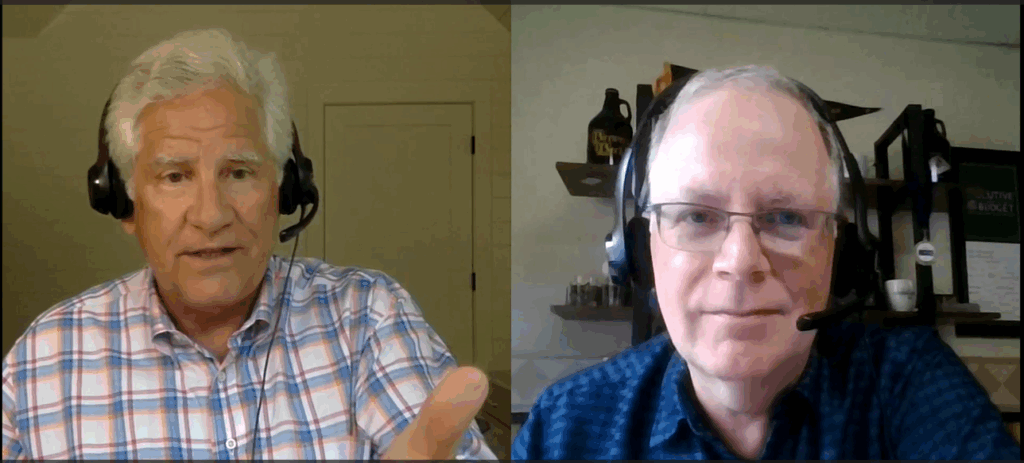
Hello, I'm Guy Gordon. This is the Facts Matter podcast brought to you by the Citizens Research Council of Michigan, obsessively nonpartisan, passionately committed to being as informative as possible in a free service to Michigan residents. We thank you for joining us. Today's topic, the one big, beautiful bill act signed into law by President Trump back on July 4th.

Beauty is in the eye of the beholder. We're going to leave that to others to assess whether or not it's good, bad, or indifferent. We're going to focus specifically on the impact of, guess, what we'll call OBBA on the Michigan budget. And what is startling here is that it can be an immediate impact. I'm joined by Bob Schneider, the senior research analyst for the Citizens Research Council of Michigan. And Bob, thanks for tackling this because we can all agree it is big.

Yes, yes it is. And thanks, Guy. I'm happy to be on with you today.

So as we look at this, and again, we're going to do this objectively, just taking the numbers and crunching them from people, because I think the media narrative has been, well, you get all the goodies up front. All the tax cuts are going to arrive quite early. The pay-fors are going to arrive a little bit later, perhaps after the midterms. But that's not necessarily the case. And we know that in some cases, this is very broad. So how broadly will this impact the Michigan budget? What's the scope?

Yeah, it's quite large. as you said, what isn't discussed, hasn't been discussed a lot yet is the there will be an immediate impact. have we have some tax ramifications from the federal tax relief to businesses that's going to flow into our corporate income tax. We're very likely going to lose one of our Medicaid provider taxes very soon. So that's over a billion dollars.

Robert Schneider (01:55.178)
When you go, if you go back to Governor Whitmer's proposed budget in February, which is still being worked on by the legislature, and we're behind our statutory deadline. So it's over a billion dollars that would need to be cut off of that. yeah, we're going to lose revenue. So we're going to either need to cut the budget or raise taxes somewhere else to generate new revenue.

Or find new resources.

Guy Gordon (02:24.302)
Okay, so let's look at the, you mentioned corporate income tax. The corporate income tax takes effect almost immediately. I guess the good news for businesses, there are some deductions there, especially for small business, for research and development. But that in and of itself will put quite a big hole because we tie our corporate income tax, our state rate is attached to what the feds pay.

Yeah, our base, our tax base is basically the same as the federal tax base. So when you mentioned the research and experimental research and development exemptions, so that's going to reduce federal revenue. because those, for corporations that pay the corporate income tax in Michigan,

That also means that that expensing is going to come off of their tax base, the Michigan corporate income tax base, and that hits us upfront pretty hard. The House Fiscal Agency, nonpartisan agency, the legislature here in Michigan just came out with a report that estimates we'll lose over $670 million in fiscal year 2026. Again, that budget that's being worked on right now.

And that's a really big amount. And that's all general fund and it's a big chunk of general fund.

So in addition to the corporate income tax impact, which we said will be almost immediate and something that, I mean, they're gonna have to address when they come back from their summer vacation here. Medicaid provider taxes, that's something we haven't heard a lot about. We heard about Medicaid eligibility a lot on the Sunday talk shows and elsewhere. was packaged as kind of a reform, but this is different. Here in the state of Michigan, we charge insurance providers, hospitals.

Guy Gordon (04:15.176)
nursing homes and ambulance services, a tax, which then gets turned around. And we'll talk about that in a moment. But at least two of those taxes are exempt, the ambulance services and the nursing homes. But hospitals and especially insurance providers are going to have a reckoning on this quite quickly.

Yes. And the state will really bear the reckoning of it. just as background, real quick then, you're correct, Guy. This tax gets collected. Under our Medicaid program, we get a pretty healthy federal match, $2 for every state dollar, roughly. And it goes back in the form of enhanced reimbursement for the hospital tax to hospitals, to nursing homes, to ambulance providers.

and, what.

mean, seems a little odd to our listeners and viewers that, we're robbing Peter not to pay Paul, but to squeeze more dollars out of Paul to pay Peter.

Yeah, that is kind of how it works.

Guy Gordon (05:15.436)
think the Wall Street Journal referred to it as a scam, which is a subjective analysis. But this was kind of perceived to be something that was problematic by lawmakers and they sought to address it. But the loss of that insurance provider fee or tax as they lower these caps, what will that do to the budget?

So the insurance provider assessment, you mentioned two that will be affected. Hospitals will come later. The hospital tax will start to be reduced later. We're very likely to have that insurance provider assessment eliminated in the coming months would be my guess once a federal rule that's related to this gets approved. That means essentially that the state will have about a $450 million

budget hole because that's currently $450 million of this tax directly goes to just offsetting other state revenue, probably our general fund revenue that would otherwise have to be used. So now all of a sudden it's either we have to cut Medicaid significantly by maybe a billion and a half dollars or find, and this is probably the most likely outcome, find other revenue.

from the general fund to replace the lost insurance provider assessment revenue.

At least in the near term, do insurance providers get a break and is that something they could pass along to us in the form of lower premiums?

Robert Schneider (06:44.442)
The way that tax is designed, not really. Our private health insurers do pay it, but it's a tiny tax to them. We used to have another HICA tax that was a very big political storm and that was a much higher tax. This is very, it's a kind of minutiae type tax on private.

private health insurers, it's our Medicaid health insurer health plans that pay most of the tax, which is why the federal government has told us, look, we're not going to allow you to do this anymore and it's going to have to go away.

Now the hospital, I think they refer to it as a quality assessment.

Quality Assurance Assessment Program Packs. like to call it QAP.

They're so clever, aren't they, finding these different monikers for everything. But there is a cap on that right now, and that cap will be descending on a phased-in basis.

Robert Schneider (07:42.67)
Yes, yes. we, the federal government currently allows states to assess provider taxes like the hospital tax, up to 6 % of patient revenues effectively. And starting in fiscal year 28, they, that will start to come down by half percent increments. five, five, five, four, five, four, and eventually in 2032 down to 3.5%.

That is, that's a lot of, that's a lot of money for Michigan. And it's going to mean, you know, again, we currently use that tax revenue to match federal revenue and pass most of it back to the hospitals. So our report draws on some state data that shows that we would expect when it's fully phased in in fiscal year 32, it's about a $1.7 billion potential hit.

to hospital reimbursement through our Medicaid program, which is sizable and is going to impact all hospitals, but I think particularly maybe some of our smaller hospitals and rural hospitals that are already operating on pretty tight margins are going to be especially impacted.

And those are hospitals that are already dealing with staffing shortages. also, they tend to deal with a higher proportion of Medicaid patients, They didn't care in some cases.

That's generally going be correct. Yep, that would generally be the case. Hospitals in the rural and then our most urban areas as well. But that's an issue. And then the state is going to face the decision because if you don't want that $1.7 billion hit down the road,

Robert Schneider (09:30.722)
The only way to preserve it now for the state is to find again, just like with the, we talked about with the insurance provider assessment, find more of our own existing revenue to shift back into Medicaid and then have that general fund revenue match federal funds and keep the hospitals whole. And they will need to decide one way or the other or someplace in the middle. But to the extent that you don't backfill with some other revenue that hit.

that it ends up coming.

Alright, I haven't been using my abacus, but I think we're somewhere in the neighborhood of 2.5 billion in impacts already. Corporate income tax, insurance providers, and when you total up the 1.7 billion on the hospital.

from...

Robert Schneider (10:15.95)
Yeah, that's sort of the net. It'll be over time. the 1.7, we'll talk about the number. So we have to kind of define the potential hospital impact, which is the $1.7 billion in lost revenue to the hospitals. make the hospitals whole,

that that's going be over time.

Seven-year window. Yeah.

Robert Schneider (10:42.21)
the number the state's going to need to pull in is over a half billion. So about $500 billion. And if we can find 500, I think it's $515 billion, a million dollars, I'm sorry. And if we can find that, then the feds will say, okay, well, we told you the lower your hospital tax, you found other revenue, so we're going to match that. And now the hospitals get their 1.7 billion back.

All right, there's one key program that we haven't talked about yet, and it's a big one. Since 1964, we've referred to it as food stamps, but it is the SNAP program, the Supplemental Nutrition Program. And this could be very large as well over time. What do you see?

So there are two big provisions that's going to affect state costs regarding SNAP. The first is traditionally this program has been federally funded. The benefits under the program have been federally funded. 100%. The federal government through OBA now has changed that provision and states will begin to have to starting in 2027,

100 %

Robert Schneider (11:55.99)
have to start contributing towards the cost of SNAP benefits. And that percentage, the state's share of those costs is going to be determined based on the state's error rate. the federal government requires an audit process to go back and determine, look at a sample of cases and determine, we overpaid, we underpaid?

It doesn't necessarily have to be we paid somebody who didn't owe anything. And those error rates then, which have been calculated for some time and states have been encouraged to bring them down, that's going to determine how much you pay. And states could pay up to 15 % if they have very high error rates.

a loophole. Not because it impacts Michigan, which has been our focus, but there is a certain tick-off factor here that I think the taxpayers and policymakers should be aware of, courtesy of Alaska Senator Lisa Murkowski.

Yes. In order to conjure up some votes in the Senate, when this passed on the Senate side, the US Senate, they have a provision that if your error rate is really high, which is over 13 and basically 13.3 percent, for the states with the highest error rate, and I think there were eight of them, if they keep those high error rates and

25 and 26, they will actually be exempt from these cost sharing provisions for a couple of years. So they won't see any cost sharing in fiscal year 28 or fiscal year 29. Michigan is likely to see five to 10 % cost sharing likely, and that's 150 to $300 million. These relative high-weight states are off the hook for-

Guy Gordon (13:47.404)
got a pretty good error rate. mean, and this ostensibly should act as an incentive to states to improve that error rate, correct? To be more efficient administrator.

Our report, it has been coming down. Michigan used to be at 13. It came down to 10. The last reported number was nine and a half, roughly, in fiscal year 24. Our report estimates we're probably going to get down. States that get their rate below 6 % are exempt from cost sharing. And I think that will happen for Michigan, probably by 20.

if we keep on this trajectory by 2030, 2031, and we make some assumptions about that that will happen in our report.

Okay, that's cost sharing on benefits. What about administrative costs, which traditionally we've split 50-50 with Uncle Sam.

Correct. And those change as well. The state administrative cost share will go up to 75%. So now it'll be a 75 state 25 federal cost share. That's likely another $100 million of cost hit to Michigan.

Guy Gordon (14:58.472)
Let's talk about that. We've covered the big three, corporate income tax, the Medicaid and SNAP. We've also, I think, done a pretty good job showing that we're going to need to wrestle this alligator pretty quickly, maybe as soon as the next couple of months. Some folks may be saying, look, all you're talking about is costs. It sounds kind of negative. But in terms of the tax cuts that are coming, we're oba not passed.

it would have felt like a tax increase. could this potentially enhance Michigan's growth because taxes to some extent have come down?

I mean, so most

We see a revenue bump because of that. Will that offset some of these costs?

Most of OBBA isn't a tax cut as much as it's preventing a tax hit.

Guy Gordon (15:51.982)
extension so we probably won't feel it.

So our current revenue estimates would already take into account of the economic trend that we were on. There will be some tax cuts. Folks probably have heard tipped income, overtime pay. There's a new credit for seniors. Interest deduction. Yep. Car interest. Those things are new.

I'm Carlos.

Robert Schneider (16:22.478)
those things will definitely leave people with some extra disposable income. Theoretically, that could fuel some stimulus. At the same time, though, I always remind people the state has to run a balanced budget. generally, if we lose revenue, we end up

If we cut somewhere else in the budget, also takes, so that's negative economic stimulus too, while we're doing the budget cutting. So yeah, yes, there are some tax cuts. They will be somewhat stimulative in the first year, but I don't think folks are seeing them as, there's a lot of restrictions on who gets them. And I don't think folks are expecting to have a major economic impact.

Do we have a grand total here at the delta number, if you will, about what the overall cost will be to Michigan's budget?

We do. So I'll talk. I can talk about that in two ways and kind of need to. So right now, so we're working on the twenty twenty six budget. have the governor's recommendation out there. The Senate is past a version of the budget. The House has not yet. I deliberations are ongoing. It's a billion. It's it's one point one billion dollars now that we have a new problem, a new challenge.

in finishing the budget because we are going to have to forego over a billion dollars that we thought we were going to be able to spend in some way in the budget. And that's in addition to there's still discussions about the road funding deal and whether we're going to move revenue to roads and that also would have to come out of something else. So the budget, this budget is going to be significantly impacted. Looking ahead, if we go forward to about, you know, 2032,

Robert Schneider (18:26.926)
We have a chart in the paper that shows the impacts of all these different OBPA provisions probably eat into about 40 % of our general fund growth when we look outward to 2032. And that's a significant amount. the state budget was already starting to get tighter, and this is going to make it more

Well, and we've heard some of the, I mean, there's been doomsday, there's been a fuse of praise, and I've said, we'll leave that to others. But we haven't talked much about the human toll. And that's because that will basically be determined by the budget makers if they can backfill these spending cuts. And so we really can't say at this point, it's going to be up to your state reps, your state senators, and from the executive branch of the budget.

Yeah, that's true of all these items that we talked about, the provider taxes. There is, I mean, I think work with another significant provision that we don't address so much in this paper, but we had just, we just issued another report recently about the work engagement requirements. And that probably, again, those will not be implemented right away. It's one of the things that you said that it was kind of pushed off a little.

when those hit, those will potentially have some real impacts. The Congressional Budget Office issued a number nationwide. They expect about 10 million additional uninsured because folks will, between work requirements, some new more aggressive sort of eligibility determination requirements. And so that human impact will be coming.

that should actually save the state a little money. we do factor that into our analysis too, but most of those savings go to the federal government. Our Healthy Michigan plan, which is our Medicaid expansion program, is funded 90 % by the federal government and only 10 % by the state. So when we talk about Medicaid savings from some of these policies, most of that savings will go to the federal government.

Guy Gordon (20:40.088)
So at least in the initial phase, there's going to be a $1.1 billion shift, a 1 billion plus shift of responsibility from the federal government financially to the states. Beyond that, what are the biggest takeaways from your paper, Bob Schneider?

would say, you know, it's those two budget highlights, which is the state is going to face in an already challenging budget cycle, both politically and policy-wise, how do we find money for roads? We now have added a $1 billion new challenge to that and a budget that very well could be, if we don't have a budget by September 30th,

On October 1st, it's we don't have, we can't run state government. We'll have some form of shutdown. Longer term, I think state policymakers, those who follow the budget and are stakeholders in the state budget will need to realize we had some high times for a while post COVID with a lot of revenue growth and those days are past us. Regular

We were forecasting regular revenue growth out over these next five or six years. And now with the OBA impacts, we're going to lose 40, 50 % of that. so the budgets, fitting new things into the budget, enhancing the budget is going to get much, much harder. If you're a state university, if you work for a state department, you Medicaid and all this stuff, you're not going to have a lot of room for growth.

Could be a very difficult, rocky end to summer and early fall. And by the way, quick correction, I might have misspoke and said 1.1 million instead of billion. That's just the eternal optimist in me coming out. It's going to be heavy and it will be big. Bob Schneider, senior research analyst for the Citizens Research Council of Michigan, thank you so much for your scholarship on this. You can find this paper at CRC MISH.

Guy Gordon (22:53.23)
in addition to the other publications regarding the impact of Medicaid and all of the wonderful nonpartisan research that the Citizens Research Council of Michigan does. And we should point out that they are nonpartisan. They do not accept government funding. They do not lobby. And they believe passionately that facts should matter in policymaking, not politics. And if you support that idea, we would appreciate your support with a donation.

to the Citizens Research Council of Michigan again at CRCmish.org. I'm Guy Gordon. This has been a Facts Matter podcast coming to you from the Citizens Research Council of Michigan. We thank you for joining us.

The Citizens Research Council of Michigan has been providing lawmakers, academics, the media, philanthropists, business leaders, voters, and all Michiganders with actual, unbiased, independent information on significant issues concerning state and

with

Guy Gordon (23:51.374)
significant use local government organization and finance for our research.

Guy Gordon (24:16.49)
Check out our numerous papers, podcasts.

and blogs and listen to our while you're there please consider supporting our research donation. This has been a Facts Matter podcast, a presentation of the Citizens Research Council of Michigan.

your support search with the donation.