"The right to criticize government is also an obligation to know what you are talking about."
-Lent Upson, first director of Citizens Research Council
|
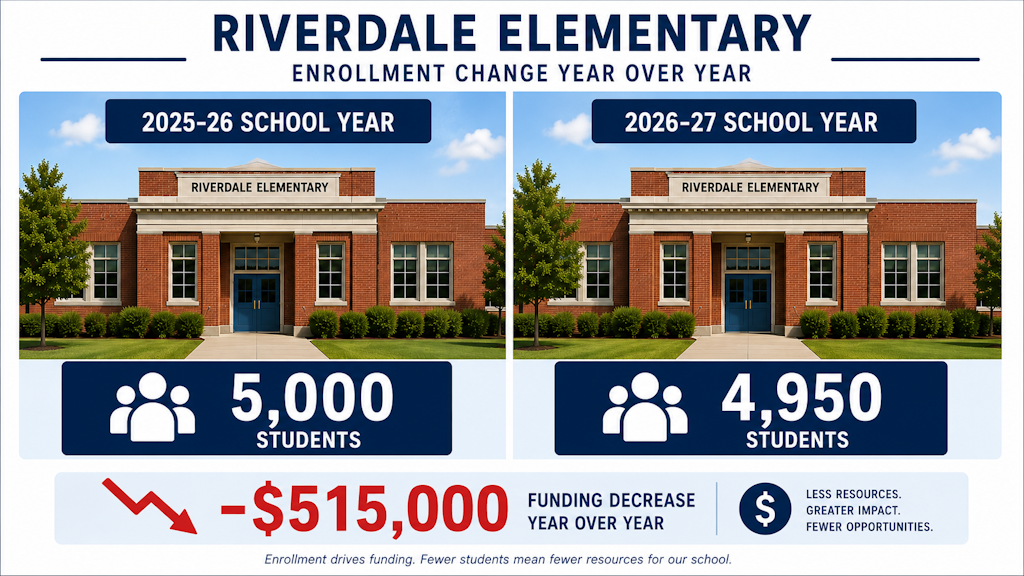
Highlights: - New Council Brief: Michigan’s New Declining Student Enrollment Funding Policy is Good News . . . at Least for Now
- New Podcast: Con-Con Series: Article VIII - Education
- ICYMI: Council Brief: Accelerating Michigan’s Path to Prosperity
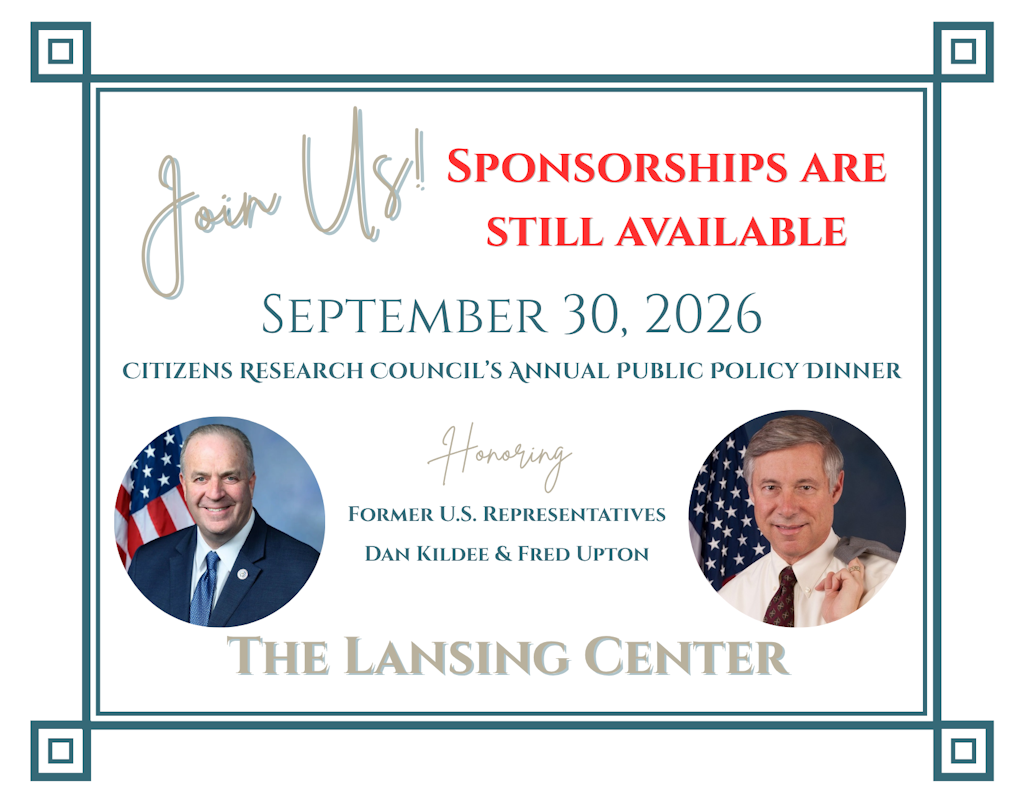
- Sponsorships Still Available: The Annual Public Policy Dinner on September 30
- Detroit Issues Guide 2026: A Voters Guide About Policy Issues
|
Michigan’s New Declining Student Enrollment Funding Policy is Good News ... For Now
|
When districts enroll fewer students than the previous year, they lose the per-student dollars assigned to those children. To help districts address some of the immediate financial pain, recent state School Aid budgets have set aside dedicated funding to offset up to one half of districts’ funding losses due to declining enrollment.
As we noted in our recent state budget analysis, the FY2027 School Aid budget includes over $1.4 billion in “one-time” appropriations. Several of these appropriations have appeared for at least four consecutive budgets and many districts have come to rely on these “one-time” dollars every year to finance their general operations.
To avoid future funding cliffs and structural budget pressures, local officials should treat the additional aid as transitional support, while state policymakers should consider whether declining enrollment assistance should become a permanent and sustainable component of the School Aid budget. Without a longer-term solution, the state’s new policy may ease the pressure for now, but it will not resolve the underlying fiscal challenges facing Michigan’s declining enrollment districts.
|
In a Nutshell -- Declining student enrollment has been a financial challenge for Michigan K-12 school districts for over two decades and is projected to continue. But, only recently has the state begun to develop funding policies to address the fiscal realities arising from shrinking enrollments.
-- Michigan’s newly expanded declining enrollment policy provides meaningful short-term relief for districts facing immediate revenue losses, and it reflects a welcome recognition that shrinking enrollment is not a temporary or isolated problem. But the state funding policy relies on one-time resources and applies for only one year.
-- This creates significant risks for districts that build ongoing expenditures around temporary state dollars. State policymakers should consider whether declining enrollment assistance should become a permanent and sustainable component of the School Aid budget.
|
How Michigan’s Education System Could Change if Voters Approve a Con-Con
|
If voters approve holding a constitutional convention on November's ballot, it could reshape the future of education in Michigan.
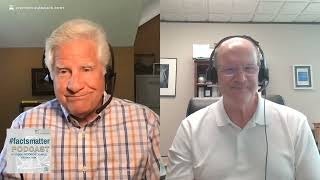
This week’s #FactsMatter Podcast breaks down what’s at stake by covering Article VIII - Education. Host Guy Gordon and Research Council president Eric Lupher explore whether Michigan might redefine education as a fundamental right, how funding adequacy could be written into the Constitution, and why accountability remains so murky across the state’s K–12 system.
|
They dig into the long‑running debate over private school vouchers and Michigan’s Blaine Amendment, a topic certain to resurface if delegates convene in 2027 or 2028.
They also tackle big‑ticket issues likely to resurface — including the elected boards at U‑M, MSU, and Wayne State — and why community colleges may need a more coordinated statewide framework.
Find all #FactsMatter podcasts on Substack, Apple, Spotify, Amazon or wherever you get your podcasts. LIKE and SUBSCRIBE!
|
Accelerating Michigan’s Path to Prosperity
|
Building Greater Upward Mobility from the Local Level Up
|
In a Nutshell -- Michigan’s path to prosperity is not only formidable, but also multifaceted. Attracting capital investment, developing a skilled workforce, improving educational attainment, and building thriving communities are all strategies widely recognized as essential to improving upward mobility for the state’s residents.
|
-- The most effective tactics are aligned with the specific circumstances in individual communities. Identifying which communities require which interventions is crucial for maximizing policy impact. State policymakers should take on the analysis, share strategies, and assist local community leaders with implementing locally-tailored programs for greatest success.
-- Recently developed tools provide access to data that give insights into which strategies would most benefit a particular community. Michigan community leaders can design smarter policies using these data analysis tools and replicate effective programs to accelerate economic mobility across communities. By building greater upward mobility from the local level up, Michigan has the opportunity to grow the state’s economy and ensure that growth is shared broadly among its residents.
|
Detroit Future City and the Citizens Research Council of Michigan have developed a nonpartisan Detroit Issues Guide 2026 to help Detroit residents better understand how state and local government decisions affect the issues they care about most—including housing, public transit, public education, taxes and business attraction, and crime and public safety.
|
Designed to encourage informed civic engagement and support voter participation, the guide provides factual context around each issue.
The guide is part of a broader voter education effort led by the Detroit Early Voting Coalition, a collective of organizations dedicated to increasing civic engagement and voter literacy in Detroit. The coalition launched Detroit’s Early Voting Challenge, a competition that encourages Detroiters to beat their neighborhoods to the polls during the in-person early voting period. The next early voting period for the General Election begins October 24. Visit early.onecivic.org for more information.
|
Republican gubernatorial race centers cutting ‘waste, fraud and abuse’ as an affordability strategy, Gongwer|State Affairs (August 3)
Detroit has a shortage of national retailers. What can officials do to attract more chains to the city?, The Conversation (August 3)
AI data center backlash makes Michigan's Democratic primary a fight over corporate power, Drop Site News (August 2)
Citizens Research Council Awarded “Outstanding Policy Achievement”, Michigan Business Network (August 1)
Dem Lawmakers Say Whitmer Could Have Prevented Planned Parenthood Closures, MIRS News (July 31)
Data Centers Divide Democrats in Michigan Primary, Drop Site News (July 29)
Oakland County schools seek new tax to bypass funding limits. Some cry foul, Bridge Michigan (July 29)
Report: Michigan’s budget much bigger than ‘on paper,’ likely tops $86B, The Manchester Mirror (July 27)
Bits and Tidbits, MIRS News (July 27)
CRC report identifies shortfalls in new 2027 state budget, MAC Legislative Update (July 24)
Michigan's Property Tax System Roundtable (Virtual), Hosted by Citizens Research Council, State Bar of Michigan (July 24)
|
Help Power Policy That Works for Michigan
|
Our “Fact Tank” fuels better government through trusted, independent research. But it doesn’t run on fumes—it runs on your support.
Make your tax-deductible donation today to keep Michigan informed, accountable, and moving forward.
Ready to make a lasting impact? Learn more about planned giving today.
|
Citizens Research Council of Michigan
Livonia 734.542.8001 | Lansing 517.485.9444 | Holland 616.294.8359
|
|