"The right to criticize government is also an obligation to know what you are talking about."
-Lent Upson, first director of Citizens Research Council
|
Highlights: - New Council Paper, Con-Con Series: Article XI-Public Officers and Employment
- Upcoming Webinars: Understanding Michigan's Upcoming Ballot Issues
- September 22 - Proposal 1: Should Michigan Hold a Constitutional Convention
- October 1 - Proposal 2: Money Out of Politics
- ICYMI: #FactsMatter podcast explores eminent domain and more as part of Article X-Property
- ICYMI: Council Brief - Local Government Considerations in Hyperscale Data Center Development
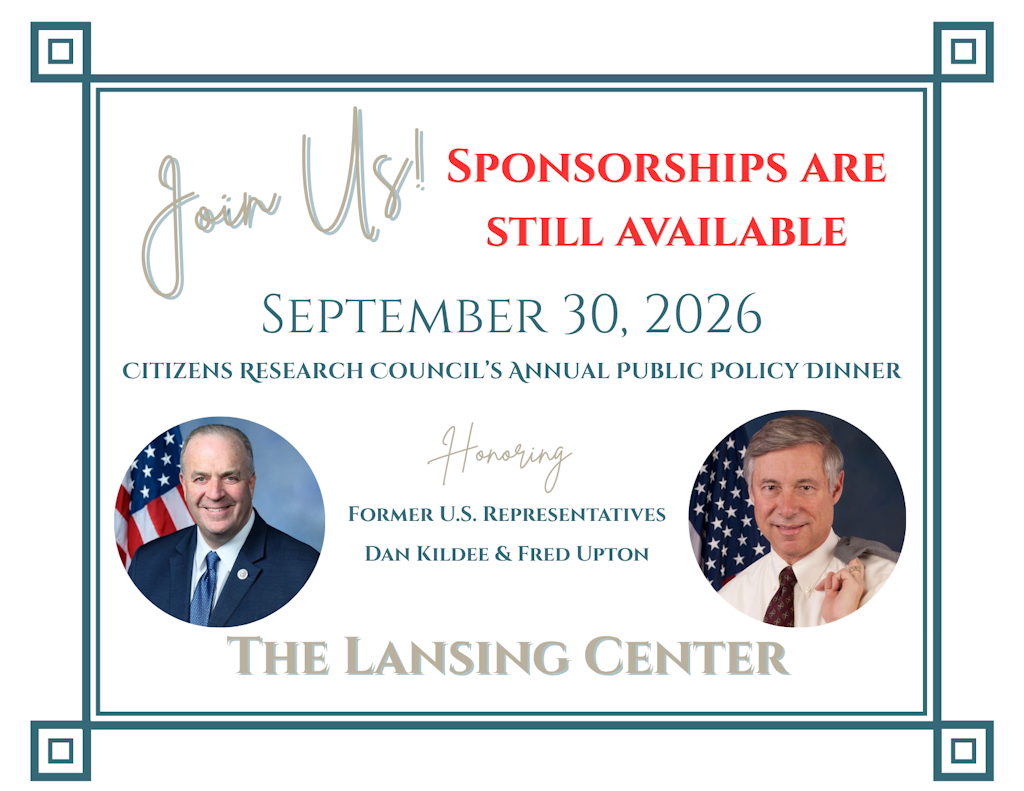
- Individual Tickets Now Available: September 30, Annual Public Policy Dinner, Lansing Center
|
Article XI of Michigan’s Constitution: Public Officials and Employment
|
Article XI – Public Officials and Employment, the 14th of 15 papers in the Citizens Research Council’s constitutional convention series, examines the provisions governing public officials and employment. Article XI provides for an oath of office for public officers, the start of terms of office, a classified state civil service, a merit system for local government employees, and the impeachment of civil officers.
Article XI contains provisions that regulate public officers and employment. At a constitutional convention, debate over Article XI would likely focus on the state civil service, collective bargaining for state employees, and the potential to establish stronger ethics requirements for state officers and employees.
|
Live Webinars on Michigan's Two Upcoming Ballot Questions
|
Proposal 2026-01: Should a Constitutional Convention be Convened
Proposal 2026-02: Money Out of Politics
|
On Tuesday, September 22 at noon, the Citizens Research Council will hold a live webinar for the public to walk through Proposal 2026-01, which will appear on statewide ballots this November, and asks voters whether a constitutional convention should be convened for the purpose of a general revision of the 1963 Michigan Constitution.
If voters approve this question, it will trigger subsequent election of delegates, their convening in October 2027, and a process of drafting a new constitution to be submitted to the voters some time in the future.
The Research Council has been publishing a series of papers and podcasts to provide information that voters may use to decide whether the convening of a constitutional convention is in the best interest of Michigan at this time.
This webinar will review the highlights of that series.
|
On Thursday, October 1 at noon, the Citizens Research Council will host a live webinar to walk the public through Proposal 2026-02, which will ask voters whether to enact an initiated statute. This statute aims to prohibit regulated electric and gas utilities, contractors with over $250,000 in annual government contracts, and individuals or organizations with significant connections to these utilities and contractors from making direct or indirect campaign contributions to candidates running for or holding offices that affect them.
The proposal also would expand campaign finance laws and restrictions that regulate spending on political communications. This includes laws that require disclosing donor information and apply to communications that clearly identify candidates or ballot questions, even if they do not explicitly advocate voting for or against them. It would also ensure that the law requiring disclosure of who paid for political communications applies to political communications on the internet.
|
ICYMI: What Article X in Michigan’s Constitution Says About Power, Property, and Progress
|
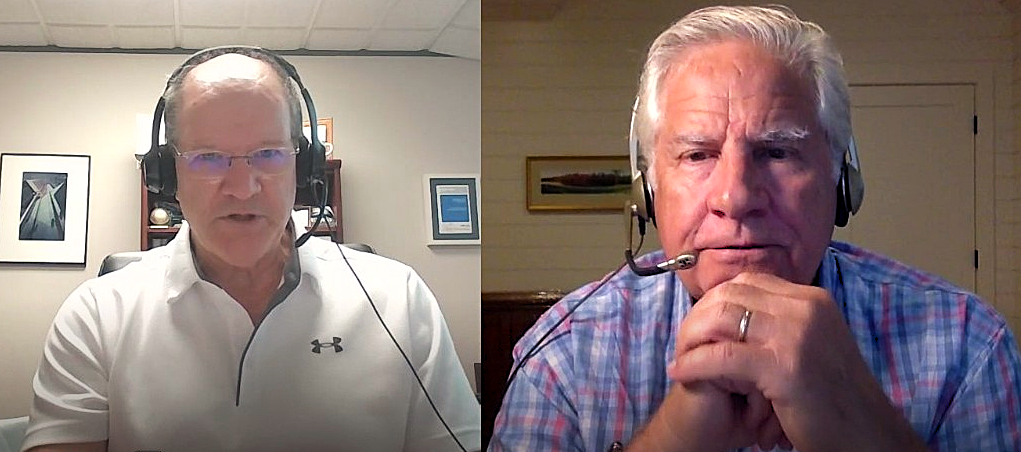
In this week’s #FactsMatter conversation, Guy Gordon and Eric Lupher continue their deep dive into Michigan’s constitution ahead of the November vote on whether to convene a constitutional convention. Article X offers a window into how Michigan balances individual rights, public purpose, and historical legacy.
|
The discussion highlights Michigan’s 2006 eminent domain amendment, which tightened the definition of “public use” and added a 25% premium for property owners — a reform that has largely delivered on its promise of protecting residents from economic‑development takings.
They also revisit the “disability of coverture,” an antiquated concept under which married women lost legal personhood. Michigan rejected this in 1850, and its continued presence in the constitution raises questions about whether symbolic protections should remain or be modernized.
Finally, the episode touches on property rights for non‑citizens — a provision that may draw renewed attention in today’s political climate. The series continues with upcoming analyses of Articles XI and XII, along with a voter‑focused webinar timed to the arrival of absentee ballots.
|
Find all #FactsMatter podcasts on Substack, Apple, Spotify, Amazon or wherever you get your podcasts. LIKE and SUBSCRIBE!
|
ICYMI: Local Government Considerations in Hyperscale Data Center Development
|
This Brief offers policy analysis that should not be construed as legal advice. Local officials should consult an attorney experienced in Michigan municipal and land-use law before acting on any matter discussed here.
In A Nutshell -- Michigan’s hyperscale data center boom was prompted by state tax policy, but local governments are now tasked with determining how individual projects are evaluated, negotiated, and approved.
|
-- The public backlash to data centers has complicated development negotiations for local government officials. They will have to balance public opposition with legal obligations and the long-term best interests of their communities. While hyperscale data center proposals do come with risks, developments can also offer substantial value to a community through property tax revenues and negotiated community benefit agreements.
-- Many of the concerns raised in public debate are sufficiently addressed through established state and federal regulatory processes. Local governments should concentrate their limited capacity on the issues within their scope of authority, such as appropriate zoning and land use, as well as local ordinances regarding noise pollution, light pollution, and other potential nuisances.
|
A vote to completely rewrite Michigan’s Constitution? What to know about the “Con-Con.” Michigan Public (September 9)
Michigan data center town hall draws questions, criticism at SVSU, Midland Daily News (September 9)
Trump’s school tax credit could hurt schools in Michigan and elsewhere, Michigan Advance (September 8)
Governmental Research Association: Nonpartisan research groups in five states win national awards for work on courts, budgets, and housing, State Affairs/WisPolitics (September 8)
Michigan Data Centers: The Weekly Download, Michigan Advance (September 7)
Report: Municipalities have options to prepare for data center development – or to head it off, State Affairs/Gongwer (September 3)
Hyperscale data centers? 'JR Morning Show (September 3)
Mich. Has 70 Data Centers Running, Roughly 14 More Big Projects In Pipeline, MIRS News (September 2)
Environmental groups call for Detroit data center moratorium as city develops ordinance, Planet Detroit (September 1)
Michigan schools keep adding staff. Where are the results?, Detroit News (September 1)
Michigan counties, towns spend $30B a year. Could collaboration get more done? MLive (August 31)
John James wants to ax income tax. Experts see cuts, boon for wealthy, Detroit Free Press (August 31)
As crisis looms for Michigan rural townships, bills to help sit idle in Lansing, Bridge Michigan (August 31)
Political professor warns voters to be wary of ‘impossible’ campaign promises, MLive (August 28)
Detroit has a shortage of national retailers. What can officials do to attract more chains to the city? UM-Detroit News (August 28)
Eric Lupher, President, Citizens Research Council, The Michigan Opportunity podcast (August 26)
|
Help Power Policy That Works for Michigan
|
Our “Fact Tank” fuels better government through trusted, independent research. But it doesn’t run on fumes—it runs on your support.
Make your tax-deductible donation today to keep Michigan informed, accountable, and moving forward.
Ready to make a lasting impact? Learn more about planned giving today.
|
Citizens Research Council of Michigan
Livonia 734.542.8001 | Lansing 517.485.9444 | Holland 616.294.8359
|
|