|

|
"The right to criticize government is also an obligation to know what you are talking about." -Lent Upson, first director of Citizens Research Council Biweekly Bonus Edition |
|
Please add maureen.saxton@crcmich-newsletter.com to your safe sender/contact list
September 10, 2025 |
|

|
Investments in At-Risk Student Funding Slow to Improve Third Grade Reading |
|
Early literacy is one of the stubborn student learning challenges that has garnered significant state-level policy attention and increased public investments in recent years. Early literacy is widely recognized as a foundational skill for future academic achievement and lifelong learning. While Michigan student test scores in several other grades and subjects have shown important (albeit gradual) improvements since the COVID-19 pandemic, the reading proficiency rates for third- and fourth-grade students continue to decline. A recent reminder of this concerning trend was brought to light when the Michigan Department of Education released the Spring 2025 statewide assessment results, showing that fewer than four in ten third graders tested proficient in reading.
Michigan’s efforts to improve early literacy among low-income students, with increased funding and accountability measures, are not yielding the hoped-for results. Our new analysis of third-grade reading results for at-risk students shows that fewer than half of all Michigan school districts have demonstrated improvement in “at-risk” student reading proficiency rates since the end of the COVID-19 pandemic. These district-level improvements, however, varied based on a district’s socioeconomic status; we found that 50 percent of high-poverty districts saw improvement in third-grade reading proficiency rates among “at-risk” students, compared to just 37 percent of low-poverty districts.
IN A NUTSHELL -- Early literacy outcomes in Michigan reveal persistent challenges for students from low-income households. State assessment data consistently show that children from underserved households are less likely to meet third-grade reading benchmarks than their more affluent peers, reflecting both opportunity gaps and broader socioeconomic disparities.
-- As part of its policy response to flagging reading scores, Michigan has more than doubled its annual investment in “at-risk” student funding, bringing the total to more than $1 billion for the upcoming 2025-26 school year. Districts are obligated, in part, to use these funds to address the needs of struggling readers and publicly report on their progress.
-- While it may be too early yet to tell, our analysis of districts’ “at-risk” student reading proficiency rates since the end of the COVID-19 pandemic suggests that state funding enhancements may be beginning to pay dividends in districts that receive greater per-student resources under the state’s new Opportunity Index funding formula. |
|
|
|
|

|
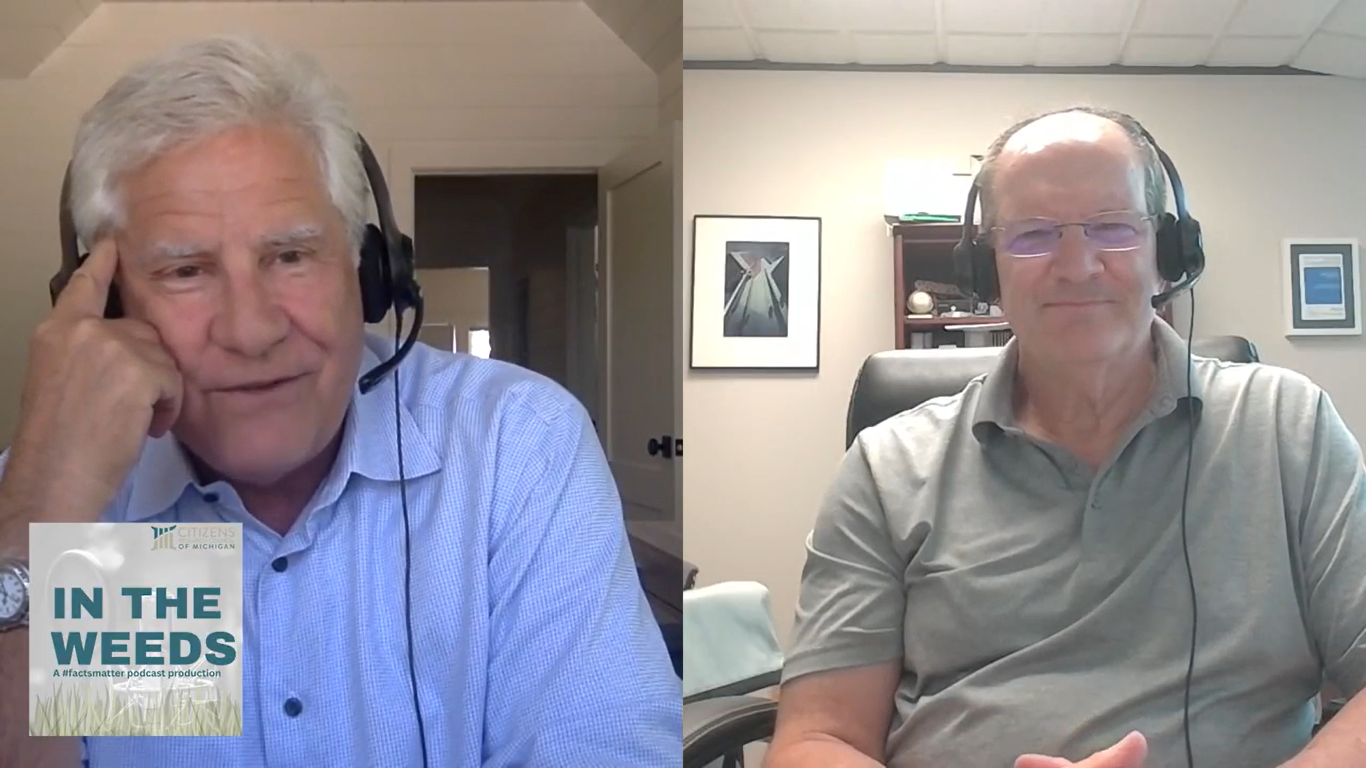
Eric and Guy dig deeper into the topic of local tax options following their conversation on an admissions, or ticket, tax for major cities, the focus of Evaluating Local-Option Admission Taxes in Michigan Cities, a major study released last week. The unintended consequence of Michigan not allowing for a local tax option has been that state property taxes are among the highest in the nation.
Michigan is one of just a few states that doesn’t allow local governments to levy a local tax without state legislative approval. Most states, including those with conservative leadership such as Indiana and Ohio, provide multiple means for their local governments to raise revenue for their local communities. Also discussed was how we got here (hint: a 1963 legislative power grab over state voters.) |
|
Find all #FactsMatter podcasts on SoundCloud, Apple, Spotify, Amazon or wherever you get your podcasts. |
|
|
The Research Council in the News |
|
|
|
Help Power Policy That Works for Michigan |
|
Our “Fact Tank” fuels better government through trusted, independent research. But it doesn’t run on fumes—it runs on your support.
Make your tax-deductible donation today to keep Michigan informed, accountable, and moving forward.
Ready to make a lasting impact? Learn more about planned giving today. |

|
Citizens Research Council of Michigan
Livonia 734.542.8001 | Lansing 517.485.9444 | Holland 616.294.8359
|
|


|
Unsubscribe Footer
|