|

|
"The right to criticize government is also an obligation to know what you are talking about." -Lent Upson, first director of Citizens Research Council Biweekly Bonus Edition |
|
|
|
Regulation of Large Livestock Farms is Not Working for Farmers or the Environment |
|
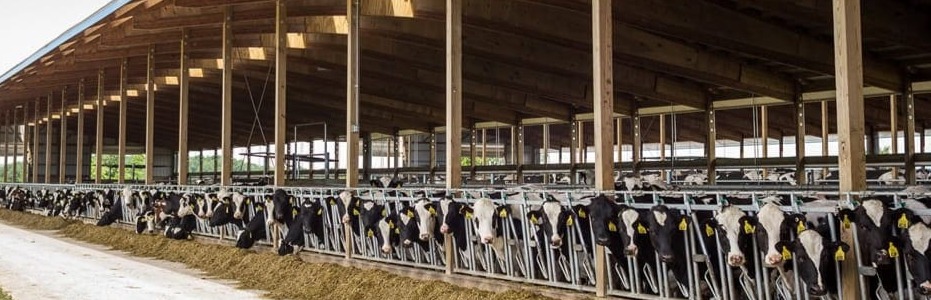
Concentrated Animal Feed Operations (CAFOs) typically refer to large livestock farms where animals are confined within a relatively small area, rather than being fed through grazing or foraging in open fields. These facilities are designed for the cost-efficient large-scale production of meat, milk, or eggs and have become critical to global food supply chains. While CAFOs help meet demand for affordable protein, they also generate large quantities of animal waste that can pose environmental and public health concerns.
CAFO waste is primarily manure and is typically disposed of by applying it to crop fields as an organic fertilizer. When applied appropriately, the land application of manure is a sustainable and beneficial practice. However, CAFOs are industrial-scale agricultural operations and produce industrial quantities of waste. When more manure is spread on a field than the land can absorb, the waste may leach into groundwater or runoff into surface waters, polluting rivers, lakes, and streams.
Current approaches to CAFO waste regulation have imposed costly restrictions on farmers without adequately protecting Michigan’s environment and residents. The environmental and public health threats of CAFO waste deserve increased attention from Michigan policymakers.
IN A NUTSHELL -- Concentrated Animal Feed Operations (CAFOs) create immense amounts of animal waste—largely manure. While valuable as fertilizer, CAFO waste is often produced in quantities that exceed local demand. In such areas, CAFO waste is applied in excess, contributing to water pollution.
-- Environmental regulation of CAFOs largely depends on the use of ‘best management practices’ that are costly to farmers and unreliable for pollution control.
-- CAFOs could be permitted in a way that allows more efficient agricultural production while better protecting the environment. Before this approach can be adopted, environmental regulators must have the resources to understand where water pollution is coming from, allowing them to address problem areas without imposing unnecessary restrictions on farming operations. |
|
Other Recent Issue Briefs:
|
|
Recent Research Papers:
|
|
|
Welcome New Detroit Bureau Director Douglas Ortiz! |
|

|
The Research Council welcomed Douglas Ortiz to its staff this week as Detroit Bureau Director. Doug has over five years of experience working in public sector finance, research, and data collection. Most recently, Doug managed budget development for the City of Detroit Department of Transportation for over three years, as well as external city agencies, including the Detroit Economic Growth Corporation, the Detroit Employment Solutions Corporation, and the Detroit Public Library. Before that, he was a research associate at Mathematica and worked at Detroit Future City. He is committed to evidence-based research, continuous improvement practices, and community engagement. Welcome, Doug! |
|
|
The Research Council in the News |
|
|
|
Help Power Policy That Works for Michigan |
|
Our “Fact Tank” fuels better government through trusted, independent research. But it doesn’t run on fumes—it runs on your support.
Make your tax-deductible donation today to keep Michigan informed, accountable, and moving forward.
Ready to make a lasting impact? Learn more about planned giving today. |

|
Citizens Research Council of Michigan
Livonia 734.542.8001 | Lansing 517.485.9444 | Holland 616.294.8359
|
|


|
Unsubscribe Footer
|