"The right to criticize government is also an obligation to know what you are talking about."
-Lent Upson, first director of Citizens Research Council
|
A Special Note to Citizen Research Council's Directors, Trustees and Funders:
You are the Research Council's most treasured members, supporters and friends. Because of that, we send you (and only you) this email newsletter/update each week, with links to our most recently published blogs, research papers, podcasts and event notices. Everyone else receives our updates bi-weekly.
In order to ensure that we are communicating with you in the most effective way possible, we have developed a very short survey to ask you what your frequency preferences are for Research Council email newsletters. Eric Lupher will send you an email next week with the survey embedded; it will take less than 15 seconds. Thank you, in advance, to taking the time to let us know your communications preferences.
|
Block Granting Federal Education Funding Presents Policymakers with Opportunity to Address Long-standing Inequities Across Schools
|
Amidst the near-daily chaos and disruption swirling around the U.S. Department of Education (massive departmental layoffs, research funding cuts, attempts to eliminate DEI in schools), a long-simmering funding proposal to block grant federal education dollars to states is garnering renewed attention. If enacted, Michigan could use the expanded flexibility over federal funding that comes with block grants to address long-standing per-pupil funding inequities across school districts with the most low-income students.
Our recent research showed that among the state’s poorest schools (i.e., minimum 73 percent low-income students), Title I allocates an average of $600 per low-income student this year. But actual funding amounts vary widely from district to district. Across Michigan’s 300 highest-poverty school districts, per-pupil allocations range from only a few hundred dollars in several districts to $1,000 per-student or greater in 10 percent of districts. From a statewide perspective, per-student funding variability of this degree is simply unfair because it leaves some schools under-resourced when it comes to serving students with the greatest needs. Existing Title I formulas fail to ensure that ALL high-poverty districts and schools are equitably resourced.
If Congress grants states more flexibility over allocating education dollars, a far better approach to serve low-income K-12 students in Michigan would be for state officials to blend/braid all, or at least a portion, of the Title I funds with the state’s existing “at-risk” funding mechanism. This formula uses per-student “weights” (expressed as a percentage of each district’s base per-pupil) to allocate $1 billion of state School Aid Funding to districts for supplemental at-risk programs.
IN A NUTSHELL
-- In its efforts to reshape the federal role in education, the Trump Administration has breathed new life into a decades-old D.C. policy proposal to “block grant” federal education funds to states, rather than use restrictive formula-driven grants required by law.
-- With greater flexibility for federal Title I funding use and allocations, state policymakers will have the opportunity to determine how hundreds of millions of dollars can be best aligned to meet Michigan’s K-12 education goals for low-income students.
-- Michigan could use the expanded flexibility over federal funding that comes with block grants to address long-standing per-pupil funding inequities across school districts with the most low-income students.
|
Catch Up On More Recent Reports:
- Uncertainty in Borrowing Costs May Be Ahead for Michigan's Local Governments
- A Data-Driven Assessment of Michigan's Road Program
- Michigan May Want to Reconsider Requiring Foreign-Trained Doctors to Repeat Residency Training
- Medicaid Eligibility Rule Changes Will Create "At-Risk" Funding Cliff for Schools Next Year
|
Exclusive Lunch & Learn on MI Roads! 🥪
|
Celebrating 109 Years - Please Help Us Reach 110!
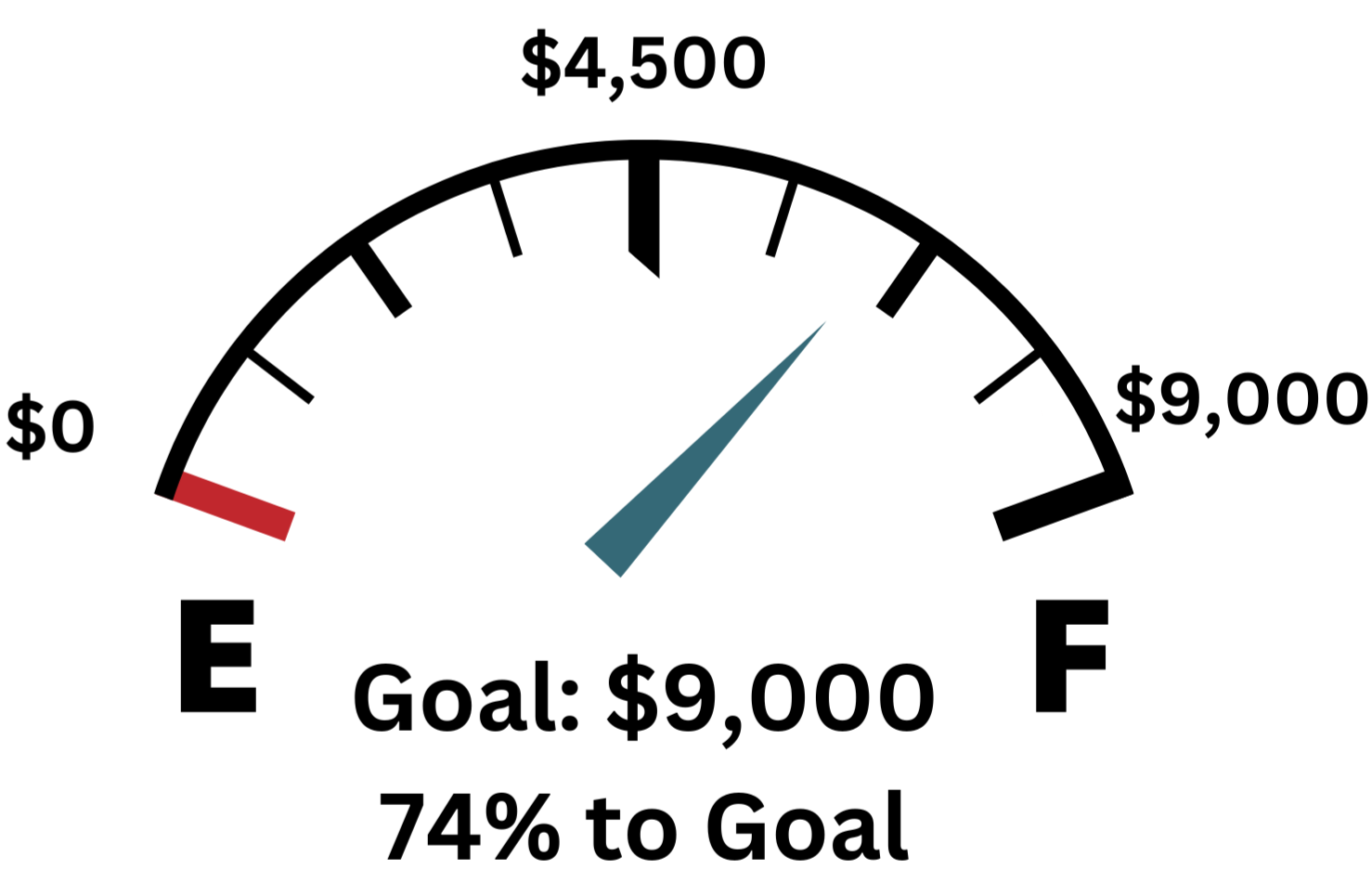
(SO CLOSE to Reaching Our Goal!)
|
We are excited to see wonderful support behind our goal of raising $9,000 to mark our 109 years of providing our public policy expertise and services to the people and the State of Michigan.
Will you donate $109, $1,009, a monthly contribution of $10.90 -- or any amount you can afford -- to our Anniversary Campaign? The campaign ends April 30, 2025.
Since 1916, Citizens Research Council has been providing robust and objective public policy and fiscal analysis, recommendations, and oversight for the benefit of Michigan's civic and business leaders, the media, and the general public.
But a think tank cannot run on fumes alone! It takes financial support to produce trusted, high-quality work.
Please take a moment and give, today. Thank you!
https://crcmich.org/donate/donate-support-give
|
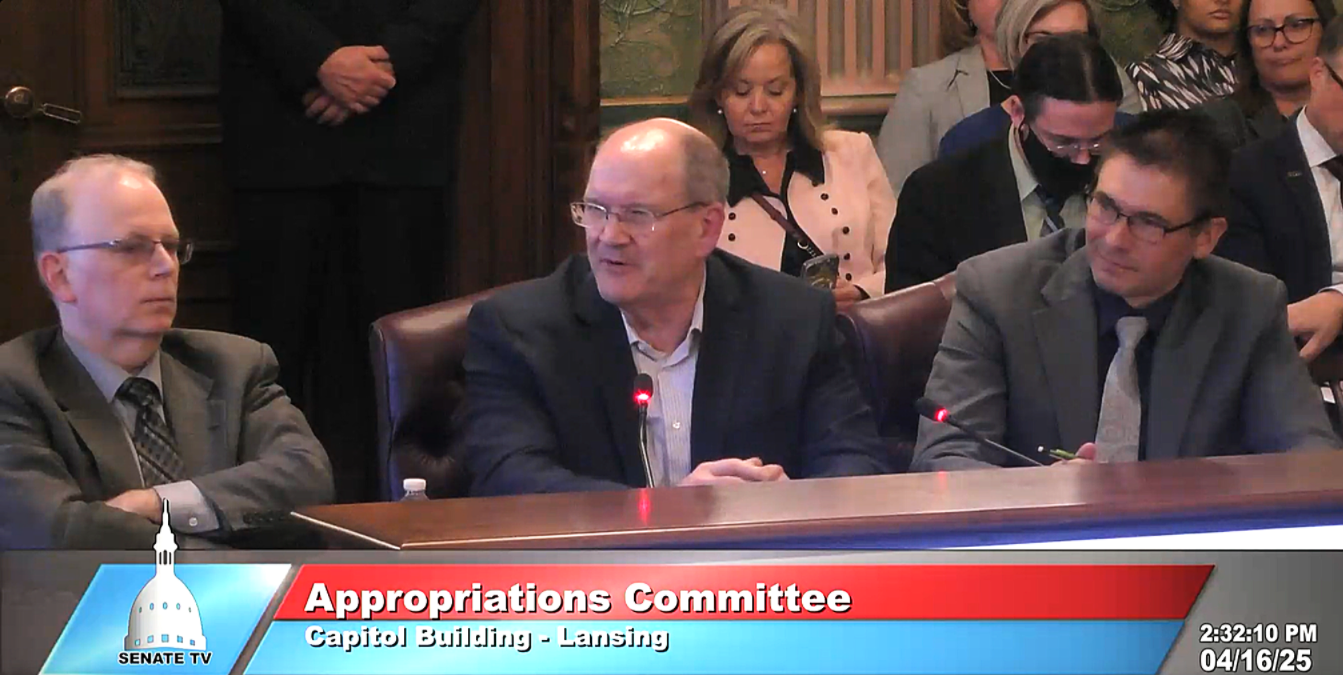
Research Council President, Eric Lupher, Infrastructure Analyst Eric Paul Dennis and Senior Research Associate Bob Schneider were asked to present before the Senate Appropriations Committee. Their presentation followed a presentation of the House Republican-sponsored road plan. Dennis provided an abbreviated presentation of his recent paper: A Data-Driven Assessment of Michigan’s Road Program. Lupher provided information on Local-Option Taxes. Schneider discussed his analysis, coupled with House Fiscal Agency data, on the House Roads package and what it could mean for the Executive budget as proposed.
You can watch the presentation here, starting at 46:09. You can review the slides by clicking the button below.
|
The Research Council in the News
|
The Road to Nowhere, Michigan Advance (April 17)
$3.2 billion Republican bill package on road funding heard by Senate, UpNorthLive (April 16)
MI Senate committee holds hearing on Republican roads plan, WKAR Public Media (April 16)
Anthony Doesn’t Know How Much Money Will Be Left If House GOP Gets What They Want, MIRS News (April 16)
Road-funding debate starts in Senate, where House plan draws skepticism, Crain’s Business (April 16)
CRC suggests pitching PA 51, MIRS News (April 15)
Donohue: Repealing state Transportation Fund Act is unnecessary, Detroit News (April 15)
Editorial: More money for roads can’t solve the problem alone, Crain’s Business (April 4)
New report shows current road funding laws in Michigan are outdated and ineffective, WDET Public Media (April 3)
New report: Michigan’s roads rank 40th in US; experts say:scrap road-funding formula and start over, Vic McCarty Show WTCM (March 31)
Research group advises new road funding model for Michigan, WSJM (March 29)
Port Austin Zoning Ordinance Debate Deepens With Village Response Letter, Newsbreak (March 28)
New formula for improving Michigan roads, WPHM 1380 (March 28)
Even after bankruptcy, Detroit is in debt, CapCon (March 27)
Detroit mayoral hopefuls embrace tax breaks for revival despite some objection, Detroit News (March 26)
|
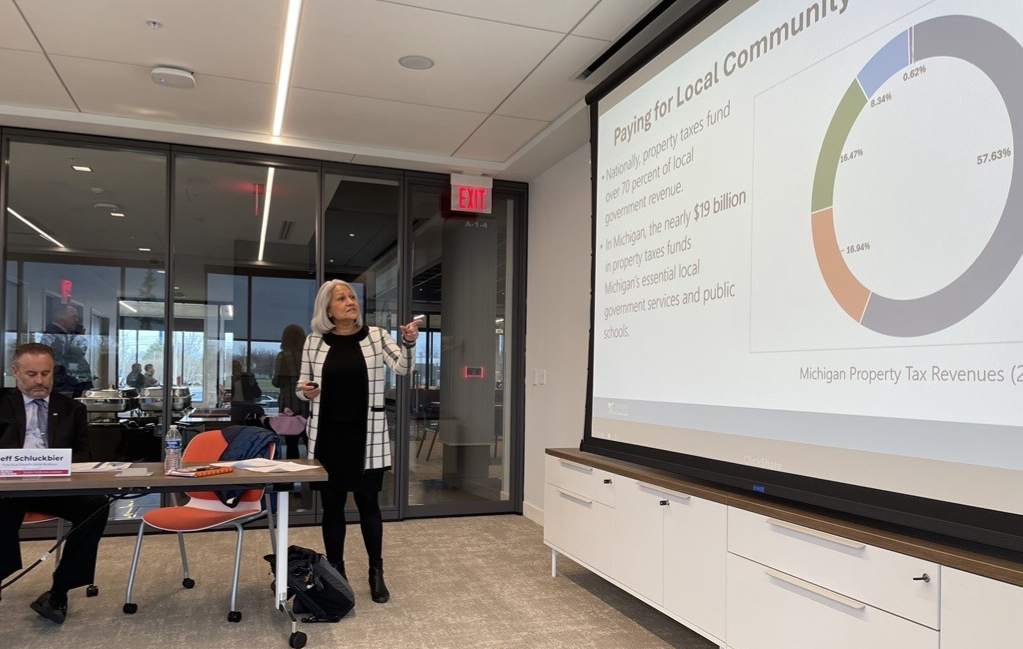
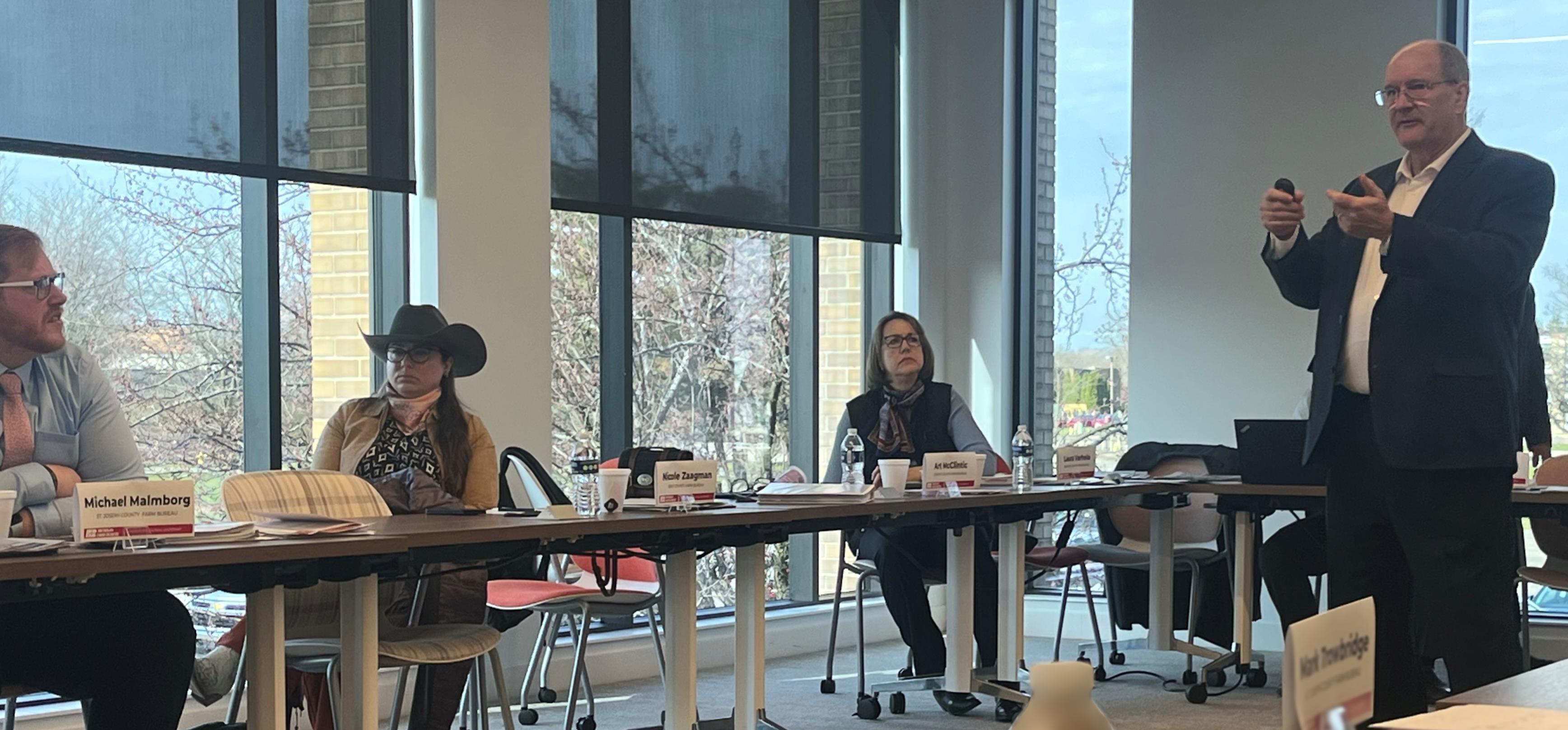
Madhu Anderson, above, senior research associate for local affairs, and Research Council President Eric Lupher last week presented before policy leaders at the Michigan Farm Bureau. Anderson provided an overview of Michigan property taxes, and the unanticipated interactions between the state's property tax limitations. Lupher discussed the potential of a Michigan Constitutional Convention ("Con-Con"), which will be a question on the ballot in November 2026. He also discussed what is required to get a citizen-backed initiative on the ballot, as well as how Michigan's laws compare to other states.
|
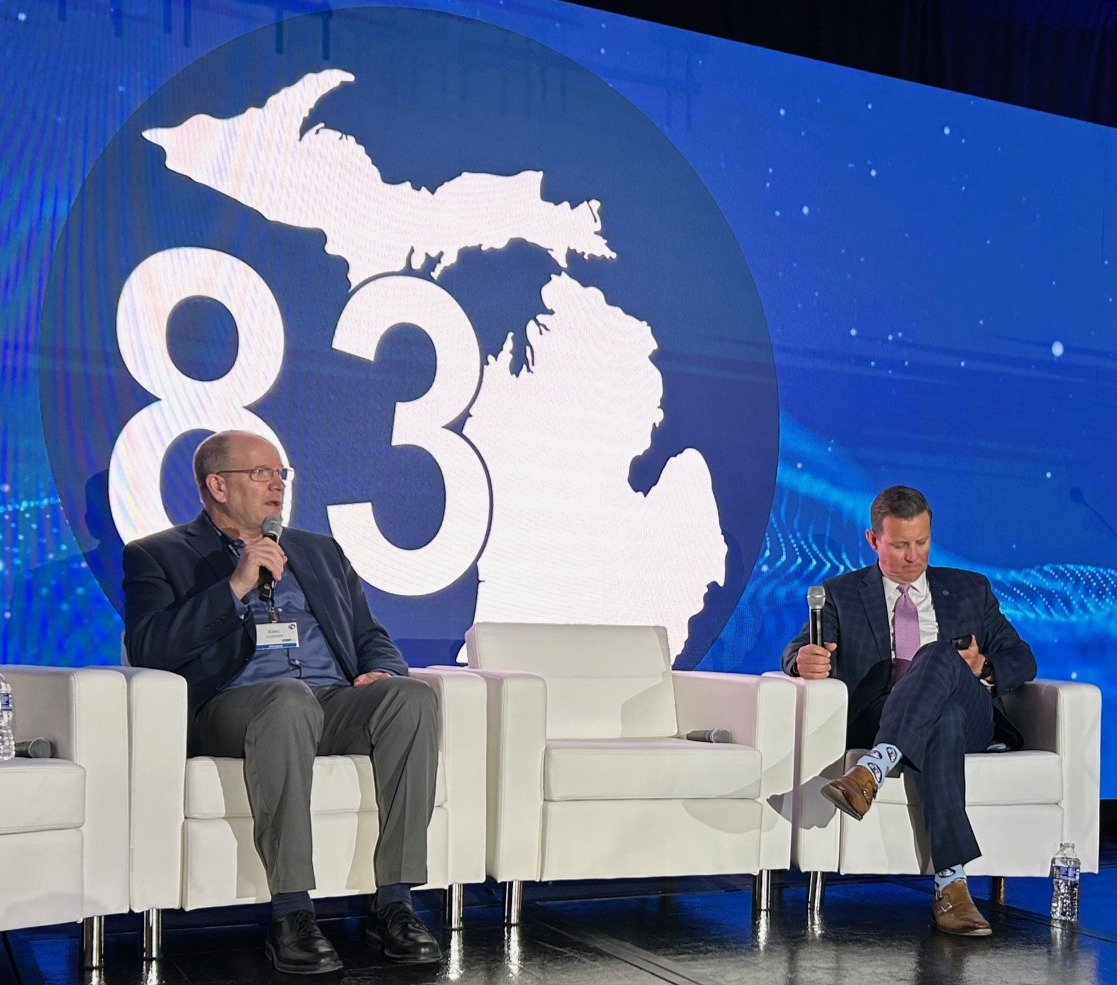
Eric Lupher, below left, also presented before the Michigan Association of Counties on the Constitutional Convention ("Con-Con") process, which will be a question on the ballot in November 2026.
|
Learn More About Citizens Research Council
|
Do you want to ensure better policy decisions and better government in Michigan? A donation to support our organization will help us to continue providing the trusted, unbiased, high-quality public policy research Michigan needs. We also accept charitable bequests. Click the fuel tank to donate or learn more about planned giving.
|
Citizens Research Council of Michigan
Livonia 734.542.8001 | Lansing 517.485.9444 | Holland 616.294.8359
|
|